Scotland – 4 legs – Edinburgh
Send download link to:

Introduction
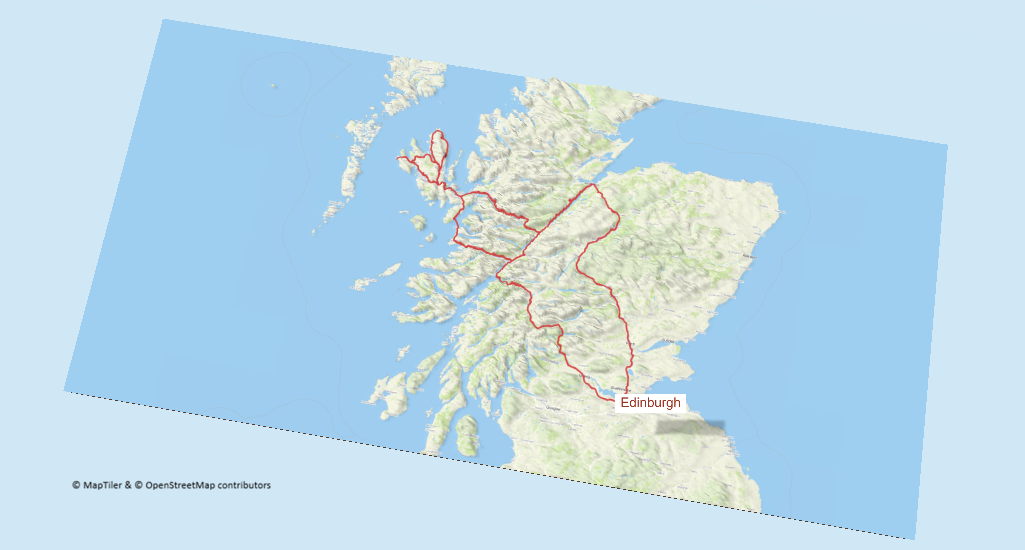
This loop is built to deliver the Highlands’ greatest hits without turning every day into a slog. You leave Edinburgh on fast A-roads that quickly thin into the long, open rhythms of the north. The route threads into the Cairngorm edge near Pitlochry and Aviemore, then aims for the Highland capital, Inverness, before swinging west to the lochs and glens around Fort William. From there, Skye is the centrepiece: big basalt forms like the Old Man of Storr and the Quiraing come with tight single-track sections where patience matters more than power. The return south is pure atmosphere through Glencoe and the Three Sisters, a landscape that feels cinematic in any weather — which is why the kit list prioritises waterproofing and visibility. Expect quick changes: bright sun, sideways rain, and low cloud can all happen in a single stage. Plan early starts, treat photo stops as part of the ride, and keep margins for wind and sheep on the road.
Map
Legend colours: WP black · POI red · Hotels blue · Restaurants green. Tap markers for Google Maps links.
Quick links to every marker (Google Maps):
Practical riding notes
Clothing, safety kit & setup
Roadbook (Stages)
WP distances are the stage-leg sums (WP→WP). POIs are treated as WPs where relevant.
Stage 1 · Edinburgh → Inverness (via Pitlochry, Aviemore) ⌄
Leaving Edinburgh, settle into a smooth northbound rhythm toward Perth, then peel into Highland scenery via Pitlochry. The road starts to feel wider and wilder as you skirt forested hills and the first big glens, with frequent lay-bys for quick panorama stops. Aviemore marks the Cairngorm edge and a good pause before the final run into Inverness. If you want an early “castle moment”, detour briefly for views toward the Moray Firth as you approach the city. Inverness is a relaxed first overnight base with riverside promenades and easy access to Loch Ness the next morning.
Stage 2 · Inverness → Fort William (via Urquhart Castle, Glenfinnan) ⌄
Today is all about lochs and icons. The first leg hugs Loch Ness to Urquhart Castle, an easy stop for dramatic ruins and long water views. Continue to Fort Augustus, where the canal locks make a lively coffee break before the scenery turns more remote. The road west to Glenfinnan builds anticipation, opening into classic Highland emptiness and sudden mountain silhouettes. The Glenfinnan Viaduct viewpoint is the headline POI—time it well and you may catch a train crossing. From there it’s a short roll into Fort William under Ben Nevis, with plenty of harbour-side evening light.
Stage 3 · Fort William → Portree (Skye) (via Eilean Donan, The Quiraing) ⌄
The ride bends west into loch country, with views that widen as you approach Dornie and Eilean Donan Castle—one of the most photogenic stops of the trip, especially in changing light. Cross onto Skye and the roads begin to tighten: sweeping coastal stretches alternate with single-track bursts where passing places and patience matter. Portree is your base, but the stage is crowned by the Quiraing loop, a cinematic ridge-road with sharp turns, sudden wind gusts and volcanic-looking formations. If time allows, add a quick detour to the Old Man of Storr viewpoint for another iconic Skye silhouette before settling into the harbour.
Stage 4 · Portree → Edinburgh (via Neist Point, Glencoe, Stirling) ⌄
Start with a western Skye flourish: the road to Neist Point is narrow and raw, with ocean wind and cliff-edge drama. Back on the mainland, the pace changes—longer, faster legs lead to Glencoe, where the Three Sisters dominate the view and every lay-by feels like a film set. This is a great stage for measured riding: wet patches, touring traffic and sudden visibility changes are common. Southbound, Stirling offers a final historic pause before the return to Edinburgh. You close the loop with an urban roll-in that feels earned after four days of open horizons and sea-spray air.
Key POIs (Maps)
POI Photo Gallery
Tap an image to open the location in Google Maps. Captions include author and licence.


.jpeg)